The Hidden Source of Your San Diego Home Allergy Flare-Ups: Coastal Humidity, Mold Spores, and How to Fight Back
Allergy symptoms in San Diego homes often trace back to attic conditions that most residents never see. Coastal humidity feeds mold growth on rafters in La Jolla, Pacific Beach, and Point Loma. Inland heat pushes attic temperatures past 130 degrees in Mira Mesa, Rancho Bernardo, and Escondido, which releases volatile compounds from rodent urine and droppings into the airflow of the house. Older urban homes near Balboa Park, Mission Hills, and North Park often still connect living spaces to the attic through leaky ceiling penetrations. In each profile, attic clean up and rat proofing corrects the source problem, not just the symptoms.
Why allergy flare-ups are so common across San Diego County
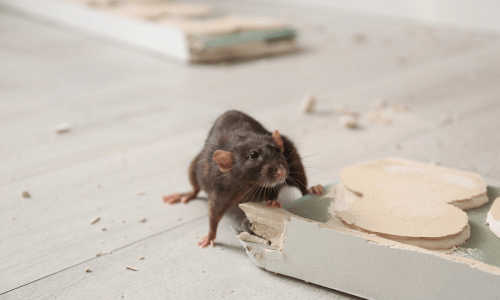
San Diego’s Mediterranean climate keeps roof rats, also called Rattus rattus, breeding throughout the year. The fruit trees, palm canopies, bougainvillea, and ivy that line neighborhood streets create a steady food and shelter base. Spanish and clay tile roof architecture, common across coastal and canyon-edge properties, leaves lift points and vent paths that rodents exploit. The result is one of the most roof-rat-pressured attic markets on the West Coast. Most attic decontamination jobs in the region involve roof rats rather than Norway rats or house mice.
Now combine that rodent pressure with microclimate realities. The marine layer drives nighttime humidity in La Jolla (92037), Pacific Beach (92109), Ocean Beach (92107), and Coronado (92118). That moisture condenses on cooler north-facing rooflines and on nail tips below roof decking. It feeds mold spores that settle into old insulation. Inland neighborhoods like Scripps Ranch, Carmel Mountain, Poway (92064), and El Cajon (92019-92021) see extreme attic heat that accelerates the breakdown of contaminated material. In that heat, bacteria-laden residue dries out, then turns to fine particulate that moves easily through small ceiling gaps.
Many San Diego houses have HVAC return pathways that pull unfiltered air through ceiling penetrations. Recessed lighting cans, bath fan housings, top plates, plumbing stacks, and the attic hatch all leak. This creates a direct path for attic particulates into bedrooms and living rooms. When the system cycles on, it draws through contaminated insulation and spreads droppings dust, bacteria, and mold fragments into the living space. That airflow is why attic clean up and rat proofing impact indoor allergy symptoms so quickly when the work is done correctly.
What technicians see in attics from La Jolla to Chula Vista
Field teams across 92101 through 92130 and the North County corridor see consistent patterns. Roof rat latrines on the backside of fiberglass batts. Urine-stained insulation below ridge vents. Chewed duct boots in Rancho Bernardo and Carmel Valley where flexible ducts pass through tight chases. Nesting near warm can lights in older homes in Hillcrest, University Heights, and Kensington. On coastal jobs, technicians often find mold staining on the underside of sheathing and on the lower edges of rafters near soffit vents. Inland inspections in Escondido, Santee (92071), and Lakeside (92040) frequently discover compacted, low R-value insulation with a fine silt of droppings mixed in.
The shareable data point for San Diego homeowners is this: roof rats dominate attic contamination here because the climate allows continuous breeding and because Spanish tile roofs and dense vegetation give them highway and shelter access. It is common to find perfect quarter-sized gaps at eaves and along roof transitions where they enter at night. In inland heat zones, summers make the attic act like a low-temperature oven. https://attic-guard.s3.us-west-1.amazonaws.com/san-diego/attic-clean-up-service-attic-guard.html That heat drives odors, increases off-gassing from urine, and degrades insulation R-value years faster than coastal properties experience.
How attic contamination fuels indoor allergies
There are three primary ways an attic drives symptoms inside the house. First, droppings break down over time. As they dry and fragment, they become airborne when the HVAC system induces negative pressure in the house. Second, urine contains pheromone compounds that remain volatile in warm conditions. Those compounds can irritate sensitive airways and draw returning rodents back through the same paths. Third, marine-layer moisture in coastal neighborhoods sustains mold growth. Even minor mold films on rafters can shed spores that drop into insulation and move through the home with regular HVAC cycling.
Older attic materials in Mission Hills, North Park, Normal Heights, and South Park often include cellulose or vermiculite installed before 1990. Vermiculite can contain asbestos. That history changes the safety posture for any attic clean up and rat proofing. Technicians need asbestos-era handling when vermiculite is present. Safe removal requires HEPA-filtered vacuum extraction with containment and sealed disposal. Doing this right protects the living space while improving air quality and energy performance.
The integrated fix: decontaminate, sanitize, and permanently exclude
AtticGuard field teams approach indoor allergy cases as one integrated job. They address source removal, sanitization, and rodent exclusion at the same time. Cleaning without sealing allows a new infestation to recontaminate the attic. Sealing without decontamination leaves allergens in place. The integrated path solves both. In practice, this means a free attic inspection with documentation photos, a written plan, and a quote that explains each step clearly before work begins.
Source removal: industrial HEPA extraction that does not spread contamination
Proper attic clean up and rat proofing starts with dry removal. Technicians deploy an industrial HEPA-filtered vacuum, often a 20-horsepower unit, to extract droppings, nest material, and contaminated insulation. They build plastic sheeting containment to keep debris from falling through the attic hatch. They use sealed disposal bags so no material re-enters the living space. When insulation is soaked with urine or heavily compacted, the crew removes it completely to expose the joists and sheathing. This step resolves the bulk of allergen load and odor.
On pre-1990 properties in Mission Hills, Kensington, or Old Escondido, vermiculite triggers an asbestos-era safety protocol. The crew treats the material as suspect and avoids disturbance until proper sampling or a conservative removal plan is in place. HEPA air scrubbers run during work to capture airborne particles. This level of control is essential in tight older homes where ceiling plasters can leak dust under negative pressure.
Sanitization: hospital-grade disinfectants and ULV fogging where needed
After removal, teams sanitize all accessible surfaces. They apply a hospital-grade EPA-approved disinfectant to joists, top plates, and sheathing. They focus on latrine sites and runways. Thermal fogging distributes the disinfectant into crevices. On severe contamination cases, ULV cold fogging produces ultra-fine droplets that penetrate the insulation layer and exposed cavities. The solution includes agents that neutralize urine pheromone trails, which helps prevent re-travel by rodents even after exclusion. On coastal mold cases in La Jolla Shores and Sunset Cliffs, targeted mold remediation addresses stained sheathing before disinfectant application. The crew dries the space with ventilation and heat as needed.
Permanent exclusion: hardware-grade materials installed to rodent standards
San Diego rodent proofing work starts with a rooftop and perimeter sweep. Technicians locate roofline gaps, eave penetrations, gable vent screens with chew marks, and unsealed soffit vents. They check plumbing and electrical penetrations, dryer vents, foundation cracks, and garage door seals. The core materials matter. Crews install quarter-inch galvanized hardware cloth, which is the chew-proof gauge for roof rat exclusion. Smaller penetrations get steel wool packing backed by weather-resistant sealant. Expanding foam is limited to non-load-bearing cavities where rodents cannot access the backside. The goal is a continuous seal around the thermal envelope.
Coastal clay tile and Spanish tile roofs need special attention. Rats lift tile edges to slip under, then follow the batten cavities to find a vent or gap. Crews use custom-fitted metal flashing and hardware cloth under tile edges near transition points. They reinforce roof vent screens and seal open conduit penetrations. In older homes, attic hatch covers are a weak point. Technicians install compression gaskets and mechanical latches so the hatch seals air and resists gnawing.
Material choices after cleanup affect both allergies and energy bills
Once an attic is clean and sealed, fresh insulation restores thermal performance and contributes to air quality control. In previously contaminated attics, borate-treated cellulose such as TAP Insulation is a strong option. The borate treatment resists pests and molds. TAP delivers R-38 to R-49 thermal performance at standard coverage depths, which aligns with California Title 24 minimums and high-efficiency upgrades. For homeowners who prefer fiberglass, Owens Corning and Knauf offer blown-in systems that fill cavities evenly and do not settle as quickly as older materials. CertainTeed and GreenFiber also have cellulose products that perform well in San Diego’s microclimates. For premium acoustic control and fire resistance, Rockwool mineral wool is an option. Icynene spray foam can be considered in specific roof assemblies where venting and moisture conditions support closed or open-cell designs. Each choice balances cost, dust behavior, and long-term maintenance.
Air sealing goes hand in hand with insulation. Crews seal top plates, chases, recessed lighting penetrations, plumbing stacks, HVAC duct penetrations, and the attic hatch before new insulation goes in. That step cuts the HVAC return pathway that once pulled attic particulates into the home. It also stabilizes indoor temperatures and reduces system runtime. Homeowners in Carmel Valley along Highway 56 often report more even room temperatures after proper air sealing and fresh insulation.
San Diego microclimate specifics that change the plan
AtticGuard calibrates jobs by neighborhood. In coastal zones like Torrey Pines State Reserve, Del Mar (92014), Solana Beach (92075), and Encinitas (92024), the plan accounts for cooler roof deck temperatures and higher nighttime moisture. Venting strategy and mold risk shape the sanitization phase. In inland areas near Lake Hodges, Daley Ranch, and Escondido Creek, crews expect higher summer temperatures and faster odor release from any remaining residues. Those jobs often move quickly to full removal and deep sanitization to reset the space. Urban core projects near Balboa Park and Downtown San Diego (92101) require careful handling around older plaster ceilings and vermiculite uncertainty.
North County coastal homes in Carlsbad (92008-92011) and Oceanside (92054-92058) often show a blend of roof rat and moisture issues. Canyon-edge properties in Rancho Santa Fe (92067), Fairbanks Ranch, and Poway see recurring rodent pressure from natural drainage corridors. In Chula Vista (91910-91915) and National City along Interstate 805, garage-to-attic transitions and utility penetrations are common entry paths. The team treats each structure as a system influenced by its microclimate and surrounding landscape.
What an honest quote looks like in 2026 across San Diego County
Clear scope and pricing signals help homeowners compare quotes without confusion. A credible attic clean up and rat proofing plan begins with a $0 inspection. It includes documentation photos, a written scope, and a fixed or range-based price tied to measurable square footage and entry point counts. Across San Diego County, typical 2026 ranges look like this. Entry-level cleanup specials run $75 to $300 when contamination is light. Standard decontamination and sanitization services usually fall between $400 and $1,200. Cleanup with insulation removal often ranges from $800 to $2,500 depending on area and depth. Full attic restoration that includes removal, sanitization, air sealing, and new insulation generally runs $3,500 to $7,000 depending on size and chosen materials.
Standalone rodent proofing often costs $600 to $2,500 based on the number and complexity of entry points and the roof style. Spanish tile, multiple gables, and older vent designs add time and materials. Insulation removal and replacement, if quoted as a separate phase, commonly ranges from $800 to $2,500 for standard levels, $2,500 to $5,000 for R-49 high-efficiency upgrades, and $5,000 to $8,000 for premium mineral wool or spray foam options. An integrated proposal that ties cleanup, sanitization, rodent exclusion, air sealing, and insulation together usually saves return trip costs and avoids scope gaps across vendors.
What to expect during a professional service visit
Teams arrive in marked vehicles and protect the living space with floor runners and plastic containment at the attic hatch. The crew leader reviews the scope again on site. HEPA vacuums run during removal. Sealed bags exit directly to a disposal zone without crossing open living areas. Sanitization follows, with careful attention to droppings seams along joists and between batts. Exclusion steps then close entry points at the roofline, vents, eaves, and penetrations. Before insulation installation, a foreman confirms air sealing at top plates, can lights, and chases. Blown-in or batt insulation is installed to the specified R-value. The team photographs major stages for the homeowner’s records.
On coastal mold jobs, the crew documents any sheathing staining and vents that show poor airflow. If mold remediation beyond surface cleaning is warranted, the plan calls that out. In older urban homes, technicians avoid disturbing suspect vermiculite and will recommend a sampling path if the material type is uncertain. Safety protocols include respirators, Tyvek suits, and eye protection throughout removal and sanitization.
Why rodent proofing must meet roof rat standards in San Diego
Roof rats climb and jump well. They run along utility lines and tree branches. They compress their bodies to fit through holes the size of a quarter. In practice, that means the material gauge and the workmanship standard have to assume a smart, agile intruder that tests edges. Quarter-inch galvanized hardware cloth stands up to their gnawing. It must be attached with screws and washers to maintain tension. Screen replacements on gable and roof vents need backing plates so rats cannot lift the screen at a corner. Sealants must be weather-resistant to survive rain, salt air, and thermal expansion from hot inland summers.
Garage thresholds and side doors near Interstate 15 corridor neighborhoods such as Rancho Bernardo and Carmel Mountain often show gnaw marks where seals have failed. Dryer vents angled downward without screens can become rodent runways. Foundation vents along older stucco walls sometimes hide gaps behind decorative grilles. An experienced exclusion team finds and fixes all of these, then checks them again after sanitization and before insulation goes in.
Attic upgrades that reduce allergies over the long term
Once the attic is clean and sealed, a few upgrades extend the benefits. Air sealing recessed lighting cans or replacing them with IC-rated air-tight housings helps stop contaminant flow. Sealing bathroom exhaust ducts where they transition into the attic prevents reverse flow of humid air. Resealing duct connections at plenums and boots protects indoor air and restores HVAC efficiency. In older North Park and University Heights homes, adding dedicated return paths that do not pass through attic leakage points can improve air quality further.
Material selection also affects dust behavior. TAP Insulation’s borate treatment adds a mild pest deterrent effect that pairs well with exclusion. High-density fiberglass from Owens Corning and Knauf resists settling, which keeps R-values stable. Rockwool mineral wool resists moisture and maintains shape, which helps in coastal zones with elevated humidity. The best choice depends on the home’s age, microclimate, and budget. Homeowners in Encinitas and Carlsbad along Interstate 5 often choose cellulose for its acoustic benefit against coastal roadway noise, while inland homes near Highway 78 and Escondido pick fiberglass or mineral wool for heat control.
Local case patterns from the field
La Jolla Cove area homes often present with mold on the north-facing roof deck. After HEPA extraction and disinfectant application, crews focus on vent path improvement and air sealing before installing R-38 to R-49 insulation. In Pacific Beach and Mission Beach, sand-laden air and salt exposure degrade old vent screens, which opens easy paths for rats. Reinforced screens with hardware cloth and sealed soffit penetrations close those routes. Inland in Scripps Ranch and Rancho Peñasquitos, can light penetrations and attic hatch leaks are common. Air sealing and hatch gaskets reduce the return pathway that once moved allergens into family rooms.
Escondido properties near the San Diego Zoo Safari Park and Lake Wohlford see annual roof rat pressure. Citrus trees and canyon edges draw rodents back each fall. A proper attic clean up and rat proofing plan in those neighborhoods includes trimming vegetation near the roofline and closing gaps along clay tile transitions. In Chula Vista east of Interstate 805, garage-to-attic utility penetrations and laundry room dryer vent paths also drive repeat activity. Exclusion that includes proper vent terminations and reinforced seals stops the pattern.
How the HVAC return pathway spreads attic contaminants through the house
When the blower starts, negative pressure pulls air from bedrooms and halls. That deficit is made up by air leaking from the attic through gaps around light fixtures, duct boots, and top plates. If insulation carries droppings dust or mold fragments, those particles enter the airstream. The system then distributes them through supply ducts into occupied rooms. The result looks like allergies that get worse whenever the HVAC runs. After attic clean up and rat proofing, homeowners frequently report that musty odors disappear and morning congestion recedes. The effect can be immediate because the source path is cut and the allergen reservoir is removed.
Safety and compliance details that matter in San Diego County
Licensed contractors in California operate under the CSLB framework. Attic crews must follow biohazard handling rules for droppings and urine-soaked materials. EPA-trained technicians select disinfectants approved for residential use. In older homes with possible vermiculite, asbestos-era protocols apply until lab results confirm material status. Venting adjustments must preserve required airflow at soffits, gables, ridges, and roof vents to protect the roof deck. Any change to ductwork gets tested for airflow and sealed with mastic or approved tape. Technicians document work with photos for homeowner records and for real estate disclosures when needed.
Why homeowners prefer a single integrated contractor
Splitting cleanup, exclusion, insulation, and air sealing across multiple vendors can create scope gaps. A rodent control company that places traps but does not seal entry points leaves the house open to re-entry. An insulation contractor who blows new material over contaminated batts buries the problem. The integrated model schedules removal, sanitization, rodent exclusion, air sealing, and insulation in one coordinated sequence. It also allows a lifetime warranty on sealed entry points because the same team verified the envelope after sanitization and before insulation.
Service coverage across the county from an Escondido base
AtticGuard operates from 510 Corporate Drive Suite F in Escondido 92029, near Auto Park Way with quick access to Interstate 15 and Highway 78. Dispatch covers the 92101 to 92130 corridor through Mission Valley, Kearny Mesa, and Carmel Valley, and reaches coastal jobs along Interstate 5 from Del Mar to Oceanside. North County service includes Encinitas, Carlsbad, Solana Beach, Rancho Santa Fe, San Marcos (92078), Vista (92083-92084), and Valley Center (92082). East County coverage includes La Mesa (91941-91945), Lemon Grove (91945), and Santee. South Bay coverage includes Chula Vista (91910-91915), National City (91950-91951), and Imperial Beach (91932-91933). Same-day or next-day estimates are common across these zones.
How to tell if the quoted process will actually help allergies
Look for five signals in the scope. The contractor removes contaminated insulation with an industrial HEPA vacuum under containment. The plan includes a hospital-grade EPA-approved disinfectant applied to all accessible framing. The exclusion scope specifies quarter-inch galvanized hardware cloth, steel wool reinforcement, and weather-resistant sealant. The proposal includes air sealing of top plates, can lights, and all visible penetrations before insulation is installed to R-38 or R-49. The bid explains where ULV cold fogging or thermal fogging will be used and why. When these steps appear together, the job targets the root cause of allergies rather than masking odors.
Typical outcomes homeowners report after proper work
Homeowners across Carmel Mountain, Tierrasanta, and Clairemont often say the musty start-up smell from the HVAC disappears. Families in Carlsbad and Encinitas describe fewer morning sneezes and less dust on surfaces. Residents in Pacific Beach notice that the late-night scratching above ceilings stops, and that it stays quiet through the following season. Power bills often stabilize or drop slightly after insulation and air sealing restore R-value and reduce system runtime.
San Diego’s shareable attic fact that surprises most residents
Most roof rat infestations in San Diego enter through quarter-sized gaps along Spanish tile edges and eave returns. Those rats do not live in sewers or basements like Norway rats. They live above ground in palms and ivy tangles, travel along utility lines, and drop into attics from the roof. This behavior pattern is why an attic clean up and rat proofing plan must start on the roof and at upper vents, not just at the ground. It also explains why trapping alone seldom solves the problem for long in neighborhoods from Bird Rock to Del Mar Mesa.
Map Pack signals that help neighbors find the right contractor
Local visibility increases when projects include specific documentation. Before-and-after photos of roofline gap sealing, labeled shots of sealed conduit penetrations, and images of disinfectant application on joists show transparency. References to neighborhoods and landmarks such as Torrey Pines State Reserve, Mission Bay, or the San Diego Zoo often reflect true local experience. Quotes that mention California Title 24 R-38 standards and specific materials like TAP Insulation or Owens Corning fiberglass help both algorithms and homeowners understand scope detail. Most importantly, homeowners benefit because these details reflect the quality of the work performed, not just a generic promise.
When a second opinion makes sense
If a quote suggests blowing new insulation over droppings, a second opinion is warranted. If a plan relies on bait stations without sealing known entry points, it will not stop re-entry. If a contractor avoids the roof entirely on a roof rat case, expect recurring activity. On pre-1990 homes with vermiculite or on coastal homes with visible mold staining, a plan that skips safety protocols misses the mark. Attic clean up and rat proofing that improves indoor allergy symptoms requires discipline across removal, sanitization, exclusion, air sealing, and insulation.
Clear, local, and actionable next steps for San Diego homeowners
Homeowners in La Jolla, Pacific Beach, Carmel Valley, Mira Mesa, Rancho Bernardo, Encinitas, Carlsbad, Oceanside, Del Mar, Solana Beach, Poway, Escondido, San Marcos, Vista, El Cajon, La Mesa, and Chula Vista can fix attic-driven allergy issues with a single coordinated service. An inspection documents the current state. The crew removes contaminated material with HEPA filtration. Hospital-grade disinfectants neutralize bacteria and urine pheromones. Technicians then seal every discovered entry point with hardware-grade materials and close interior air leaks at top plates, cans, and chases. The final step installs fresh insulation at the correct R-value for California Title 24. This integrated approach breaks the cycle of contamination and recurring rodent activity.
Frequently noted questions from San Diego homeowners
Residents often ask how long the odor will linger after cleanup. On inland jobs in 92126, 92127, and 92128, most odor dissipates within days once urine-soaked insulation is removed and all surfaces are sanitized. Coastal jobs in 92037 and 92109 may take longer if the attic needs drying time after mold remediation steps. Another common question is whether rats will return even after sealing. A proper roof rat exclusion job using quarter-inch galvanized hardware cloth with reinforced vent screens and sealed penetrations holds up under local pressure. Trimming vegetation near the roofline and maintaining garage door seals protects the investment.
A brief checklist homeowners can use during estimates
- Does the scope include industrial HEPA vacuum extraction under plastic containment and sealed disposal bags? Which hospital-grade EPA-approved disinfectant will be applied, and will ULV cold fogging be used where needed? Will quarter-inch galvanized hardware cloth and steel wool with weather-resistant sealant be installed at all entry points? Are top plates, can lights, plumbing stacks, and the attic hatch included in the air sealing plan? What R-value and material brand are specified for insulation replacement, such as TAP Insulation, Owens Corning, Knauf, CertainTeed, or Rockwool?
What sets the local contractor apart in practice
On every attic clean up and rat proofing job, the difference lies in field decisions. Technicians who know Spanish tile details understand where roof rats lift edges. Teams experienced in coastal humidity watch for north-facing mold streaks that hide behind baffles. Crews working in older Hillcrest and North Park houses understand how to seal around plaster without damage. Those are not generic skills. They come from hundreds of local attics and constant calibration to San Diego’s microclimates.
Ready to stop attic-driven allergies at the source
AtticGuard operates from 510 Corporate Drive Suite F, Escondido 92029 with same-day estimates across the City of San Diego corridor and North County. The team provides a free attic inspection with documentation photos and a written quote before any work begins. Every project integrates attic cleaning, decontamination, sanitization, rodent proofing, air sealing, and insulation replacement so homeowners do not have to coordinate multiple vendors. Standalone rodent proofing is available when the attic is clean. Sealed entry points carry a lifetime warranty. The company is a CSLB licensed contractor, license #1138505, with NATE-certified and EPA-trained technicians. Hospital-grade EPA-approved disinfectants and industrial HEPA-filtered vacuums are standard on every decontamination. Manufacturer authorizations include TAP Insulation, Owens Corning, Knauf, CertainTeed, GreenFiber, Rockwool, and Icynene. Homeowners across 92101 to 92130, 92024, 92008, 92054, 92064, and 91910 who want attic clean up and rat proofing that actually reduces indoor allergies can call +1-858-786-0331 for a no-pressure inspection and a same-day written estimate.
Attic Guard | Escondido Office
Business Name: Attic Guard
Address: 510 Corporate Dr # F, Escondido, CA 92029, United States
Primary Phone: +1 858-400-0670
Direct Line: +1 858-786-0331
Website: atticguardca.com/escondido
Connect With Us & Read Reviews
Yelp Reviews Facebook Instagram